
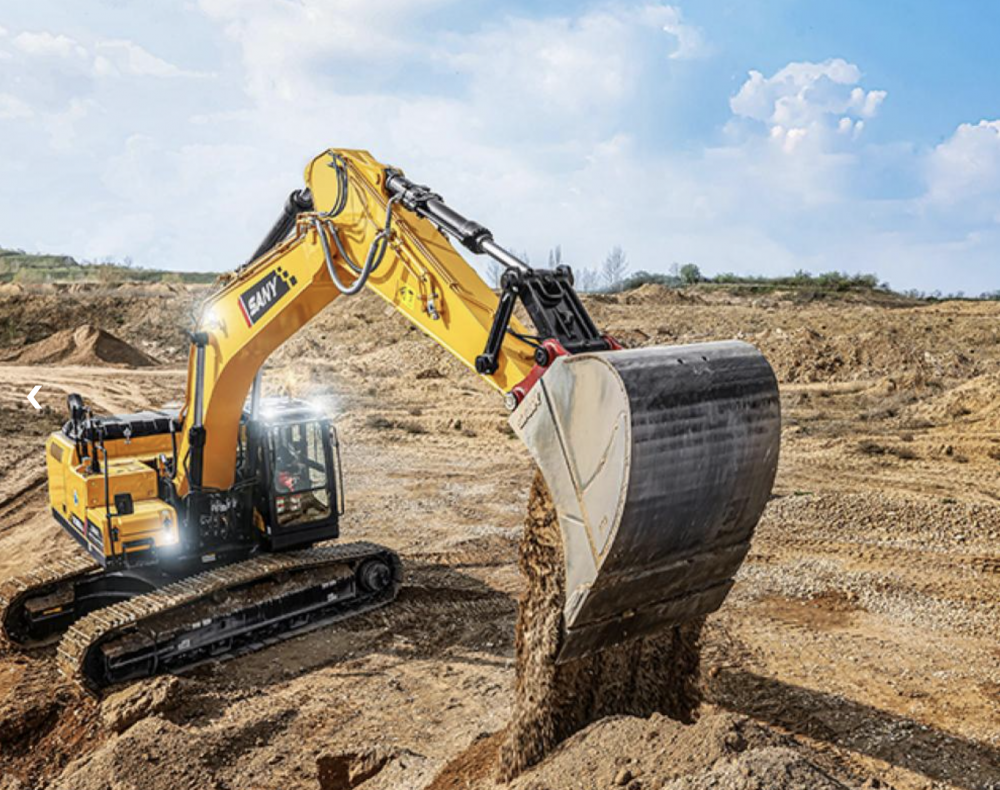
When choosing the right excavator for a particular job, there will be a lot of considerations a construction team will make depending on the type of job, location and expected scope.
However, one of the biggest and fundamental choices to make will be whether your excavator useswheels or continuous “caterpillar” tracks, and the answer will depend entirely on your priorities.
We offer a wide variety of excavation equipment to suit each job, including both wheeled and tracked options, but the key determining factor will be the size, complexity and conditions of the site itself.
Wheeled excavators tend to be a lot faster than tracks, can be more intuitive to operate because of the wheels and can move a lot faster between job sites, whether on road or on more consistent off-road terrain.
As well as this, whilst maintenance costs are perhaps less of a consideration for rented equipment, fuel efficiency and operating costs are a critical factor for remaining in budget.
Because wheeled excavators are simpler, they use less fuel and have much simpler upkeep requirements.
However, sometimes the added versatility that comes from caterpillar tracks allows for much better traction. This is often essential on construction sites during inclement weather, where there is a risk that snow or mud could cause a wheeled excavator to struggle under its own weight.
Part of the reason for this is that the weight of the machine is not focused on four points but instead is spread out across the entire length of the tracks, which avoids damaging the soil and leaving unsightly divots.
The added benefit to this is that it improves the overall stability of the machine, making it better suited for precision tasks on-site, avoiding the potential for unexpected shakes or motion.
Finally, the nature of tracked vehicles means that they have a zero turning radius, which means that they can turn whilst remaining still, making them highly manoeuvrable.
